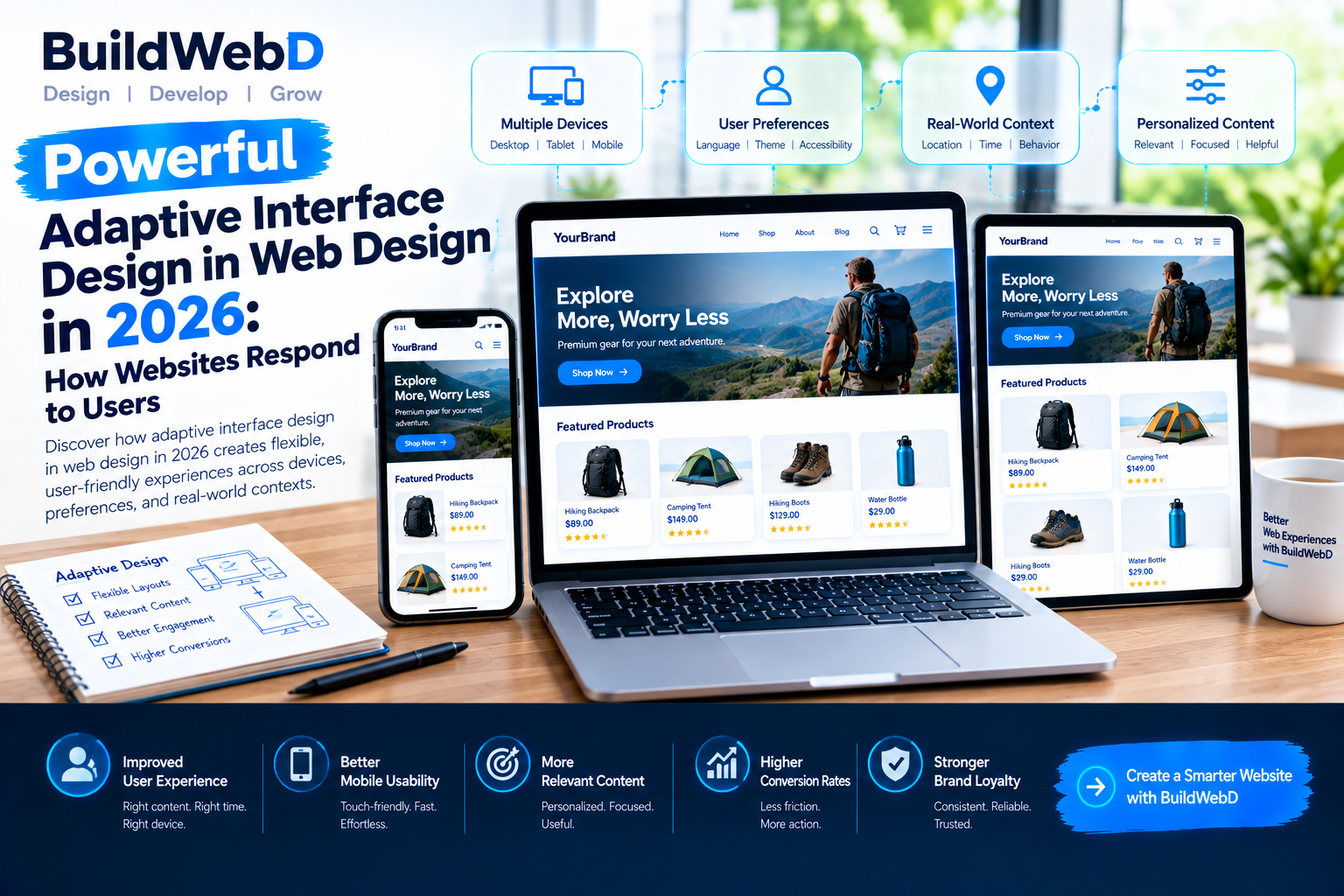
A modern website needs to do more than look attractive. It should help visitors find information quickly, complete tasks easily, and navigate comfortably across different devices. As digital expectations evolve, designers are exploring interfaces that respond more intelligently to screen sizes, user preferences, and browsing contexts.
This is why adaptive interface design in web design in 2026 is becoming an important concept for businesses planning their next website. Instead of presenting every visitor with exactly the same experience, designers can create flexible interfaces that adjust selected elements while keeping navigation and branding consistent.
The goal is simple: make websites more useful without making them complicated.
What Is Adaptive Interface Design?
Adaptive interface design is an approach to creating digital experiences that adjust certain interface elements according to available space, device capabilities, user preferences, or relevant context.
For example, an online store might display a detailed product comparison on a desktop screen while presenting a simpler, touch-friendly product view on a mobile device. A business dashboard could prioritize frequently used tools for different user roles.
It is useful to distinguish adaptive interfaces from responsive design. Responsive design primarily adjusts layouts to fit different screen sizes and conditions. Adaptive interfaces can go further by changing content priorities, interaction patterns, or available features according to defined rules or user needs.
Both approaches can work together to create more effective websites.
Why This Matters in 2026
Visitors expect websites to be easy to use whether they arrive from a smartphone, laptop, tablet, or another connected device. They also expect clear navigation, fast-loading pages, and relevant information without unnecessary distractions.
Recent 2026 UI design coverage highlights personalization and adaptive experiences alongside accessibility, purposeful motion, and simpler interfaces. These developments reflect a broader focus on usability rather than visual novelty alone. <Cite refs={[“turn490906search0″,”turn490906search1”]} />
For businesses, adaptive interface design in web design in 2026 offers a way to align digital experiences with real user tasks. A customer visiting a service website may need quick access to contact details, while an existing customer may need account tools or support resources.
A thoughtfully designed interface can make these priorities easier to discover without forcing users to learn an entirely new layout.
Key Benefits of Adaptive Interfaces
1. Better User Experience
A flexible interface can reduce unnecessary steps and help visitors focus on the actions that matter. Clearer layouts, relevant content, and intuitive controls make websites easier to navigate.
2. Improved Mobile Usability
Mobile users have limited screen space and often interact through touch. Interfaces designed around these constraints can prioritize essential information, provide appropriately sized controls, and avoid overcrowded navigation.
3. More Relevant Content
Depending on the website, interfaces can display content based on a user’s selected preferences, account role, or current task. Personalization should be transparent and useful rather than intrusive.
4. Stronger Conversion Opportunities
When visitors can understand a product, locate pricing, and complete a form without friction, the path toward a purchase or inquiry becomes clearer. Adaptive design can support these goals, although results depend on implementation and user testing.
5. More Flexible Website Systems
Reusable components and consistent design rules allow teams to improve individual interface elements without rebuilding the entire website. This can make future updates easier to manage.
Practical Examples of Adaptive Web Design
Consider an e-commerce website. On a large display, product cards might include detailed specifications, comparison options, and several filters. On a smaller screen, the same experience could prioritize product images, prices, essential specifications, and a clear purchase button.
A business website can also adapt to different visitor needs. A first-time visitor might see an introduction to the company’s services, while a returning customer can quickly access support or project information through a clearly organized interface.
In dashboards, role-based layouts can help employees find relevant tools without overwhelming them with features they rarely use.
These examples show how adaptive interface design in web design in 2026 can focus on practical improvements rather than simply changing colors, animations, or decorative effects.
Best Practices for Building Adaptive Interfaces
Start With User Research
Understand who visits your website, what they want to accomplish, and where they encounter difficulties. Analytics, interviews, usability testing, and customer feedback can reveal which parts of the interface need improvement.
Establish a Consistent Design System
Create reusable components, typography rules, spacing standards, and interaction patterns. A strong design system allows flexible layouts to change without making the website feel inconsistent.
Keep Navigation Predictable
Adaptation should not make familiar controls disappear unexpectedly. Keep important navigation patterns recognizable and make significant interface changes easy to understand.
Prioritize Accessibility
Use readable typography, adequate color contrast, keyboard-friendly controls, descriptive labels, and meaningful focus indicators. Respect preferences such as reduced motion and avoid relying exclusively on color to communicate information.
Protect Privacy
If personalization uses visitor behavior or account data, explain what information is collected and provide appropriate controls. Use only the data needed to improve the experience, and follow applicable privacy requirements.
Test Real Devices and User Journeys
Evaluate layouts on different screen sizes, browsers, and input methods. Test common tasks such as finding a service, comparing products, submitting a form, and contacting support.
Successful adaptive interface design in web design in 2026 depends on careful testing, not assumptions about what users want.
Common Mistakes to Avoid
One frequent mistake is adding adaptation simply because it sounds innovative. If a changing interface does not help visitors complete a task, it may create more confusion than value.
Another problem is excessive personalization. Moving buttons, changing navigation labels, or hiding frequently used controls can make a website feel unpredictable. Keep the core structure stable and adapt secondary elements when there is a clear benefit.
Designers should also avoid heavy animations, unnecessary scripts, and large media assets that slow down pages. Performance, accessibility, and content clarity remain essential regardless of how advanced the interface becomes.
Finally, do not rely entirely on automated personalization. Human review and user testing help ensure that changes remain understandable, inclusive, and aligned with business goals.
The Future of Adaptive Interface Design
Web interfaces are likely to become more context-aware as design systems, browser capabilities, and personalization tools evolve. AI may help suggest relevant content or reorganize selected interface elements, but these features should remain predictable and give users meaningful control.
The most effective websites will not necessarily be the ones that change the most. They will be the ones that make the right information easy to find while preserving trust, consistency, and speed.
Businesses adopting adaptive interface design in web design in 2026 should therefore focus on measurable usability improvements instead of following every new design trend.
Conclusion
Adaptive interface design in web design in 2026 represents a practical shift toward websites that respond to users’ needs while maintaining a consistent, recognizable experience. By combining responsive layouts, relevant content, accessible controls, and thoughtful personalization, businesses can build websites that are easier to navigate and more effective at supporting customer goals.
The best results come from understanding visitors, testing real interactions, protecting privacy, and keeping performance at the center of every design decision.
At BuildWebD, we believe great web design combines creativity with usability and technical reliability. Whether you are launching a new website or improving an existing one, our goal is to help you create a modern digital experience that serves your users and supports your business growth.
Ready to improve your website? Create a smarter, user-focused digital experience with BuildWebD.
Add a Comment