Web design is changing quickly. Websites are no longer built only to display information. Modern websites are becoming more interactive, personalized, accessible, visually engaging, and intelligent.
As businesses compete for attention online, keeping up with the latest web design trends in 2026 can help brands create better digital experiences and stay relevant to their customers.
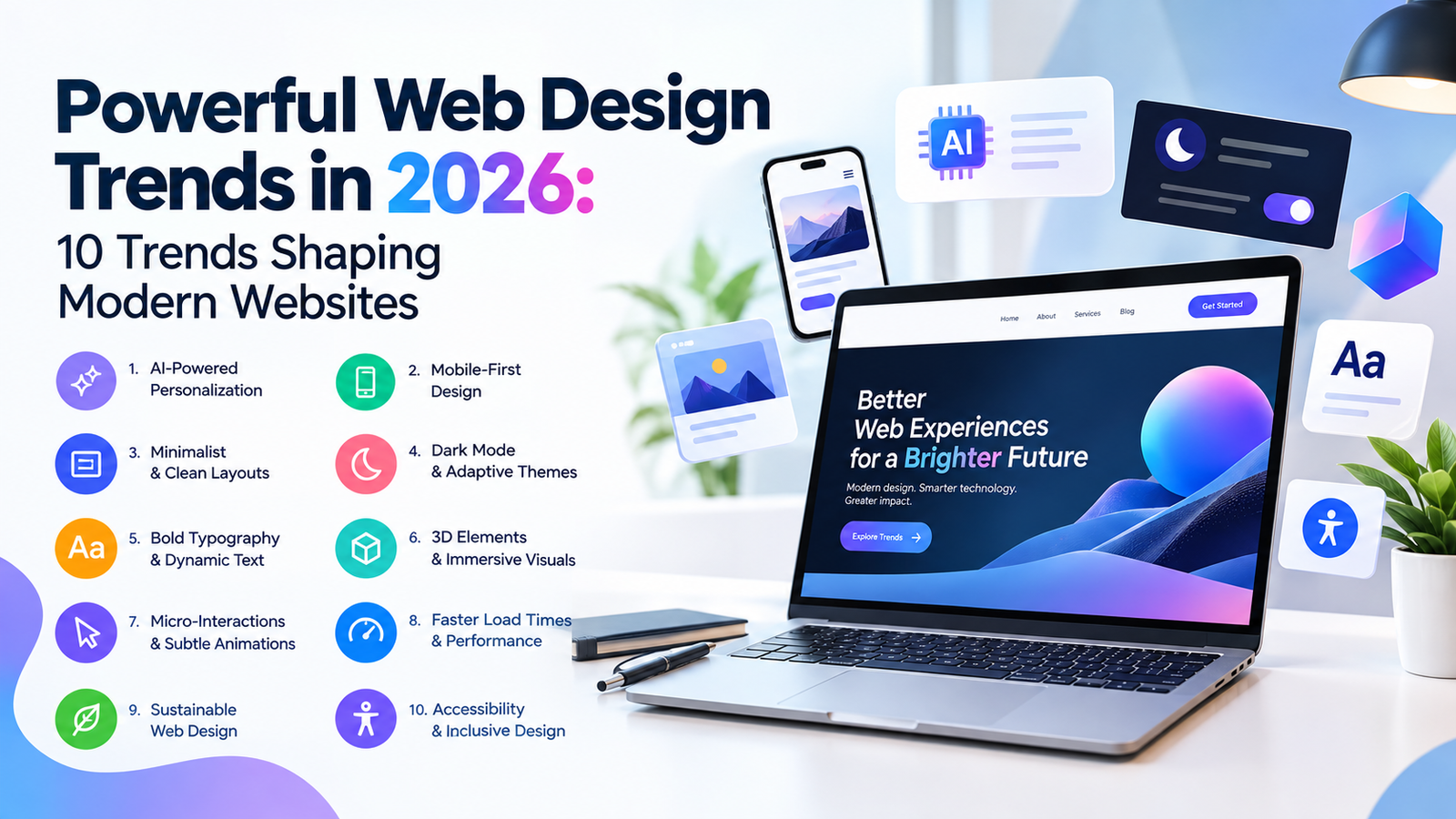
From AI-powered design and immersive 3D experiences to bold typography, accessibility, and personalized user journeys, 2026 is bringing several important changes to website design.
Here are 10 major web design trends in 2026 that businesses and designers should know.
1. AI-Powered Web Design
Artificial intelligence is becoming a practical part of the web design process.
Designers can use AI to explore layouts, generate visual ideas, create content concepts, analyze user journeys, and speed up repetitive design tasks.
AI is also being used to create smarter website experiences, including chatbots, personalized recommendations, and intelligent search.
However, AI should support creative and strategic decisions rather than completely replace human judgment.
2. Immersive 3D Web Experiences
Three-dimensional elements are becoming more accessible for modern websites.
Businesses can use 3D models, interactive product views, animations, and immersive experiences to help visitors understand products and services.
For example, an ecommerce website could allow customers to explore a product from different angles before making a purchase.
Used carefully, 3D design can make a website more memorable without compromising usability.
3. Bold and Expressive Typography
Typography is becoming a major visual element in modern website design.
Large headlines, custom fonts, variable typography, and creative text layouts can immediately communicate a brand’s personality.
Instead of using typography only to display information, designers are increasingly using it as part of the visual identity.
Bold typography is therefore one of the noticeable web design trends in 2026.
4. Motion and Micro-Interactions
Small animations can make a website feel more responsive and engaging.
Examples include:
- Button hover effects
- Animated menus
- Scroll-based transitions
- Loading animations
- Interactive cards
- Image transitions
- Progress indicators
The goal should not be to animate everything.
Good motion design guides attention and provides feedback while keeping the website fast and easy to use.
5. Personalized User Experiences
Different visitors can have different needs.
Modern websites are increasingly using personalization to show more relevant content, recommendations, messages, or products.
For example, an ecommerce website might recommend products based on browsing behavior, while a service website could display content based on the visitor’s industry.
Personalization is becoming an important part of the web design trends in 2026 because users increasingly expect digital experiences to feel relevant to them.
6. Dark Mode and Flexible Themes
Dark mode has moved beyond being a visual trend.
Many websites and applications now provide light and dark interface options.
A well-designed dark theme can create a modern appearance while giving users more control over how they interact with a website.
Designers should ensure that both themes maintain good contrast, readability, and accessibility.
7. Accessibility-First Web Design
Accessibility is becoming increasingly important in modern web design.
A website should be usable by people with different abilities and different ways of navigating the web.
Designers should consider:
- Color contrast
- Keyboard navigation
- Readable typography
- Alternative text
- Accessible forms
- Clear navigation
- Screen-reader support
Accessibility should be considered from the beginning of the design process rather than treated as a final checklist.
Current 2026 web-design research also highlights accessibility and inclusive design as major priorities.
8. Mobile-First and Performance-Focused Design
A beautiful website is not effective if it is slow or difficult to use on a smartphone.
Modern websites should be designed with mobile users in mind from the beginning.
Important considerations include:
- Responsive layouts
- Optimized images
- Lightweight animations
- Fast loading
- Simple navigation
- Touch-friendly buttons
- Efficient code
Performance and mobile usability should remain fundamental parts of the web design trends in 2026 rather than being treated as optional improvements.
9. Experimental Navigation and Unique Layouts
Not every modern website needs to follow the traditional layout of a navigation bar, hero section, three cards, and footer.
Designers are experimenting with:
- Interactive menus
- Asymmetrical layouts
- Scrollytelling
- Creative navigation
- Full-screen experiences
- Interactive maps
- Unusual content arrangements
However, creativity should not make navigation confusing.
A unique design works best when visitors can still understand where they are and what action they should take.
10. Human-Centered and Sustainable Web Design
As AI-generated designs become easier to create, businesses need stronger visual identities that feel authentic.
Human-centered design focuses on understanding real users and solving their problems rather than simply following trends.
Sustainable web design also encourages lighter pages, optimized images, efficient code, and thoughtful digital experiences.
These approaches can improve both user experience and website performance.
Why These Web Design Trends Matter for Businesses
Businesses do not need to adopt every trend.
The right approach is to select design techniques that support specific business objectives.
For example:
Want more leads?
Focus on clear calls to action, strong landing pages, and simple navigation.
Want better ecommerce sales?
Focus on product presentation, mobile UX, personalization, and an easy checkout process.
Want stronger branding?
Use distinctive typography, colors, visuals, and interactive elements.
Want better SEO?
Focus on useful content, accessible design, performance, mobile usability, and a clear website structure.
The best web design trends in 2026 are the ones that improve the experience while supporting measurable business goals.
How to Prepare Your Website for 2026
If you are planning a new website or redesigning an existing one, start with the fundamentals.
Make sure your website is:
- Mobile-friendly
- Fast
- Accessible
- Easy to navigate
- Visually consistent
- SEO-friendly
- Secure
- Easy to maintain
Then consider adding AI, personalization, motion, 3D elements, or other advanced features where they genuinely improve the user experience.
Technology should support the purpose of the website, not distract visitors from it.
Conclusion
The latest web design trends in 2026 show that modern websites are becoming more intelligent, interactive, accessible, personalized, and visually distinctive.
AI-powered experiences, immersive 3D elements, bold typography, motion design, dark mode, personalization, accessibility, mobile-first design, and human-centered experiences are shaping the next generation of websites.
But following every trend is not the goal.
A successful website combines good design, technology, usability, performance, accessibility, and a clear business purpose.
BuildWebD helps businesses create modern websites that combine professional web design, technology, SEO, performance, and user experience. If you are planning a new website or want to redesign your existing website, BuildWebD can help you create a modern and future-ready digital presence.e.
Add a Comment